The LiT List
Glamping & Camping Ideas + Resources
Five Canvas Bell Tents Compared
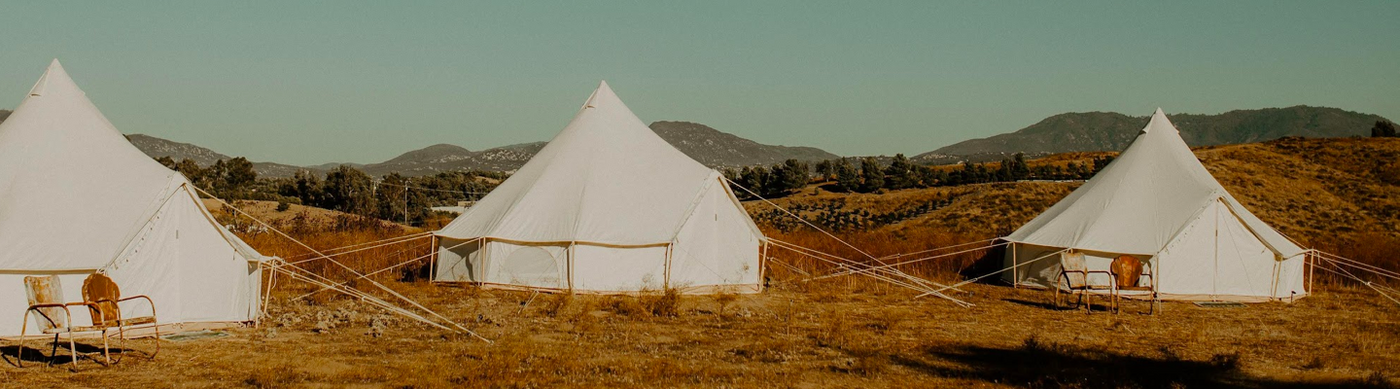
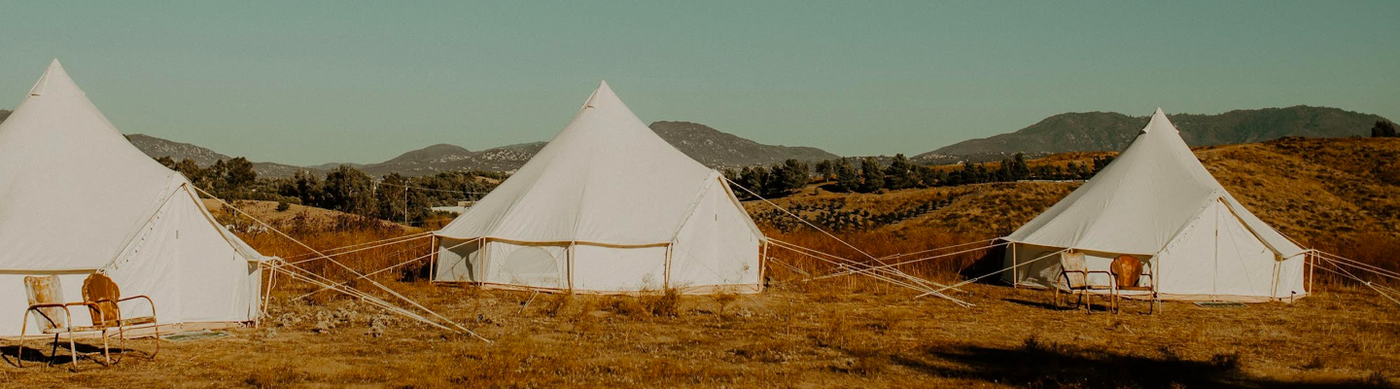
A bell tent in the 16-foot size class offers room for a bed, furniture, and camping gear. But tents that look similar in a product photo can differ sharply in fabric, floor construction, airflow, fire treatment, stove setup, weight, warranty, and total price.
We selected five similarly sized canvas bell tents, with one model from each brand: Life inTents Fernweh, White Duck Outdoors Avalon, CanvasCamp Sibley ProTech 500, Stout Pro, and Boutique Camping Classic. All five tents are approximately 16 to 16½ feet across, making them comparable in overall size.

About this comparison: Life inTents designs and sells the Fernweh and prepared this guide. Competitor specifications and prices come from manufacturers’ published information unless otherwise noted. Our Fernweh insights draw on our design and glamping experience; we have not independently tested every competitor model.
The short answer
These five bell tents offer similar floor space, but differ in usable space around beds, ventilation, canvas weight, and ease of transport. Look beyond the purchase price to consider what you’re getting: the canvas and its protective treatments, wall support, flooring, and included features—and how those will serve the way you camp.
For long-term camping, families, and repeated use, we think Fernweh deserves a close look for its combination of substantial cotton canvas, full mesh ventilation, and external wall support. The comparison below explains where each tent may suit your priorities.
How we made the comparison fair
- Size class: Traditional center-pole bell tents around 5 meters / 16 feet in diameter, not cabin tents or multi-room structures.
- Comparable price: We selected fire-retardant configurations for all five tents. Where treatment is a paid option, the table reflects that price option.
- Fabric weights: We show both grams per square meter (gsm) and ounces per square yard (oz) when published or reasonably convertible. Because coating and treatment can affect finished weight, numbers are approximate unless the manufacturer states both.
- Stove terminology: A stove pipe exit or opening is not always the same as an installed flashing unit.
At-a-glance comparison
Comparable U.S. prices use a fire-retardant configuration when the manufacturer offers one.
|
Model |
Price When Checked |
Canvas |
Fire treatment |
Why Consider It |
|---|---|---|---|---|
|
Life inTents Fernweh 5M |
$1,590 |
390 gsm / 11.5 oz; 100% cotton DOEKTEK™ Canvas |
CPAI-84 Compliant |
Heavy DOEKTEK™ canvas, full mesh, and wall support for versatile camping and longer stays |
|
White Duck Avalon 16'5" |
$1,730 |
~342 gsm / 10.10 oz ; 100% Army Duck cotton |
CPAI-84 |
Lots of windows, tall walls, roll-up canvas without a full mesh perimeter |
|
CanvasCamp Sibley ProTech 500 |
$1,529 |
320 gsm / 9.4 oz before treatment; 360 gsm / 10.6 oz finished, per CanvasCamp specs |
British |
An established European bell-tent specialist with a traditional design and full mesh ventilation |
|
Stout Pro 5M Single-Door |
$1,259 |
340 gsm / 10.06 oz; 100% cotton |
CPAI-84 compliant |
Affordable bell-tent design with full mesh wall. |
|
Boutique Classic 5M FR Cotton |
$1,600 |
320 gsm / 10 oz; cotton |
British |
Classic bell-tent from a European brand, with a tall entrance. |
Prices reflect the selected fire-retardant configurations as of September 3, 2026, before shipping and applicable taxes. Prices and availability may change; visit each manufacturer’s product page for current details.
The features that change how a tent lives
|
Model |
Floor |
360° mesh wall |
Stove setup |
Listed Weight / Support |
|---|---|---|---|---|
|
Fernweh |
Removable 16 oz PVC- ripstop |
Yes; full canvas perimeter rolls up |
Built-in 4" jack; adjusts to pipe up to 6" |
110 lb ship wt.; 30-month warranty. Lifetime support |
|
Avalon |
Removable 16 oz polyvinyl |
No full mesh wall; canvas walls roll up |
5” stove pipe opening, adjustable to 6” |
126 lb; limited lifetime warranty on manufacturing defects |
|
CanvasCamp |
Removable 650 gsm / 19 oz PVC/ripstop tub |
Yes; full mesh behind roll-up walls |
Sewn-in stove exit material. DIY cut own hole |
89 lb; limited lifetime warranty on manufacturing defects |
|
Stout Pro |
Removable “heavy-duty PVC” |
Yes |
Built-in 3” jack; adjusts to 6" |
96 lb; limited lifetime warranty on manufacturing defects |
|
Boutique Classic |
Removable 14 oz PVC-ripstop |
No full mesh wall; canvas walls roll up |
Pre-cut hole & cover; flashing kit required for fire safety. |
86.4 lb; 2-year warranty; 30-day returns |
IMPORTANT A fire-retardant treatment reduces flame spread under a stated test; it does not make canvas fireproof. Follow the tent and stove manufacturers' instructions, use proper clearances and heat shielding, and comply with local fire restrictions.
Five canvas bell tents assessed
Life inTents Fernweh Bell Tent

Who might choose it: Families, couples, and hosts seeking a versatile tent for camping trips, furnished getaways, and longer stays. Particularly worth considering for buyers who prioritize mildew-resistant canvas for damp conditions, supported sidewalls around raised beds, and CPAI-84 compliance.
Fernweh combines 390 gsm / 11.5 oz DOEKTEK™ 100% cotton canvas with a removable 16 oz PVC ripstop floor, full perimeter mesh, and 11 external wall poles. Its built-in stove jack accommodates pipe diameters from 4 to 6 inches. The design grew out of our experience furnishing tents for guests in our mobile glamping business.
Strengths
- Substantial, treated cotton canvas: DOEKTEK™ is treated for water, UV, rot, and mildew resistance and pre-shrunk for dimensional stability. Its stated fabric weight is the highest in this comparison, although treatment and measurement methods affect comparisons. Mildew resistance deserves particular attention for repeated use in damp conditions; proper drying and care remain essential.
- Supported sidewalls around furnishings: Eleven external wall poles help maintain the perimeter wall shape. Its 29.5-inch sidewalls provide more clearance near the perimeter than the 24-inch walls on CanvasCamp and Stout. None of the other selected tents includes this wall-pole system.
- Flexible ventilation: Roll up the canvas walls to expose full 360° mesh while retaining an insect barrier. Four screened windows and four ceiling vents provide additional airflow options when the walls stay down.
- Care beyond the tent: Our approach—Camplete Campassion—extends from thoughtful tent design to helpful, responsive, human support. Whether you’re choosing your first tent, setting up camp, or need help long after purchase, we aim to bring the same care to your experience as we do to our tents.
Tradeoffs
- Transport and handling: The stated shipping weight is 110 lb. Its substantial canvas and additional hardware deserve consideration when planning loading, storage, and frequent campsite moves.
- Upfront investment: Buyers who do not need the combination of substantial canvas, full mesh, and external wall support may find a less expensive tent meets their needs. Fernweh’s value is strongest when those features contribute to how you actually use your tent.
White Duck Avalon

Who might choose it: Buyers planning furnished or longer-term setups who prioritize 36-inch sidewalls, a tall entrance, and numerous windows. The selected Fire Water Repellent configuration also suits buyers seeking documentation of CPAI-84 compliance.
Avalon combines 10.10 oz / approximately 342 gsm 100% Army Duck cotton canvas with a removable 16 oz polyvinyl floor and a 5-inch stove opening. Its canvas walls roll up for an open-sided setup, but do not reveal a continuous mesh perimeter.
Strengths
- Tall walls and entrance: The 36-inch sidewalls provide clearance near the perimeter, while the 6'2" doorway offers more headroom when entering and exiting. These dimensions are worth considering for furnished setups.
- Many windows: Ten screened windows provide ventilation while the canvas walls remain down.
- Substantial removable floor: The 16 oz polyvinyl floor unzips for separate cleaning and drying.
Tradeoffs
- Transport and handling: The selected fire-retardant configuration has a stated weight of 126 lb, which deserves consideration for frequent campsite moves.
- No full perimeter mesh: Rolling up the canvas walls opens the sides without retaining a continuous insect barrier. Buyers wanting screened airflow around the entire perimeter may prefer another configuration.
- No external wall-pole system: Avalon relies on its standard pitching and tensioning system to maintain the tall sidewalls. Compare both wall height and wall support when planning furniture placement.
CanvasCamp Sibley ProTech 500

Who might choose it: Campers planning short getaways with sleeping pads or low-profile beds who value an established canvas-tent specialist, full mesh ventilation, and a range of compatible accessories.
The Sibley ProTech 500 combines 100% cotton Tentex® C32 canvas with a removable 19.2 oz PVC/ripstop tub floor. Per CanvasCamp’s published specifications, its canvas weighs 320 gsm / 9.4 oz before treatment and approximately 360 gsm / 10.6 oz after treatment. The selected configuration includes fire resistance to the British BS 7837 standard.
Strengths
- Full perimeter mesh: Roll up the canvas walls to expose continuous mesh for airflow while retaining an insect barrier. Four windows provide additional ventilation options.
- Robust ground protection: The removable 19.2 oz PVC/ripstop tub floor is heavier and more burly, ideal for rocky grounds.
- Transport and handling: CanvasCamp lists a product weight of 89 lb. This is on the lower end, making it a little easier to transport.
Tradeoffs
- Clearance around raised beds: The 24-inch sidewalls are lower than Fernweh’s and Avalon’s, and there is no external wall-pole system. Buyers using bedframes or raised air mattresses should check head clearance near the sloping roof.
- Additional stove preparation: The U.S. configuration includes sewn-in stove-exit material, but the opening requires cutting and a separate flashing component must be purchased and installed.
- Fire certification is not valid for most U.S. states requiring CPAI-84. However CanvasCamp might have this available upon request.
Stout Tent Pro Single Door

Who might choose it: Budget-conscious campers planning short trips with sleeping pads or low-profile beds who want full mesh ventilation and an adjustable stove jack. Worth considering when its current price offers savings over similarly equipped alternatives, including for buyers seeking CPAI-84-compliant canvas.
Stout’s Pro 5M combines 340 gsm / 10.06 oz 100% cotton canvas with CPAI-84 fire-retardant treatment, a removable heavy-duty PVC floor, and an integrated stove jack adjustable from 3 to 6 inches.
Strengths
- Full perimeter mesh: Roll up the canvas walls to expose continuous mesh, allowing airflow while retaining an insect barrier.
- Integrated adjustable stove jack: The 3- to 6-inch adjustment range accommodates different pipe diameters. Check compatibility and installation requirements for your chosen stove.
- Removable floor: The PVC groundsheet separates for cleaning and drying, making it easier to handle these tasks between trips.
Tradeoffs
- Clearance around raised beds: The 24-inch sidewalls are lower than Fernweh’s and Avalon’s, and there is no external wall-pole system. Buyers using bedframes or raised air mattresses should check head clearance near the sloping roof.
- Transport and handling: The listed weight is 96 lb—a substantial load to move even for a short camping trip. Consider how you will load, carry, and store it.
Boutique Camping Classic 5M Fire-Retardant Cotton

Who might choose it: Recreational campers who want a traditional bell tent with a tall entrance and the option to add an inner tent for a separate sleeping area. Buyers using sleeping pads or low-profile beds may find the layout suits them; those planning raised mattresses or bedframes should check clearance near the sloping roof.
The selected configuration uses cotton canvas published as 320 gsm / 10 oz, a removable zipped groundsheet, and roll-up canvas walls with screened doors and windows. Its center height is 9'10", and its listed packed weight is 86.4 lb.
Strengths
- Tall entrance: The 6'7" doorway provides generous clearance when entering and exiting, particularly for taller campers.
- Optional sleeping partition: Fittings for a compatible inner tent give buyers the option to create a separate sleeping area. The inner tent is an additional purchase.
Tradeoffs
- Lighter canvas: Its stated 320 gsm* fabric weight is lower than others. Buyers prioritizing a substantial canvas shell should weigh that difference alongside price and portability. Fabric weight alone does not determine durability; weave, treatment, and construction also matter.
- No full perimeter mesh: Raising the canvas walls opens the sides without retaining a continuous insect barrier. Screened ventilation is provided through the doors and windows.
- Clearance around raised beds: The tall doorway does not provide equivalent headroom throughout the interior. Check the sloping roof around bed placement; there is no external wall-pole system to help maintain the sidewall shape.
- Additional stove installation: The 5M FR model includes a pre-cut stove hole and cover, but requires a separately purchased flashing kit to complete the installation. Include that component when comparing stove-ready costs.
*Canvas-weight note: Boutique publishes 320gsm / 10 oz. These are not exact equivalents: 320gsm converts to approximately 9.4 oz per square yard.
What matters most when choosing a canvas bell tent
Why canvas weight matters

Heavier, tightly woven canvas can offer greater resistance to wear, deeper shade, and some added insulation in cold weather. Those benefits are worth considering for both regular camping trips and longer stays.
At 11.5 oz / 390 gsm, Fernweh has the heaviest stated canvas in this comparison. That additional material is part of its value for buyers who prioritize a substantial shelter and comfort across seasons.
The tradeoff is more weight to transport and handle. Consider canvas weight alongside price and included features: lighter fabric may suit frequent moves, while heavier canvas may be worth the extra weight for repeated or extended use. Fiber quality, weave, construction, and protective treatments also matter.
Canvas composition matters too
Fabric weight tells you how much material you’re getting per square yard. Composition tells you what that material is—and helps explain differences in feel, moisture handling, and portability. Many brands on Amazon hide the actual material their tents are made of, so research well.
100% cotton canvas offers a natural feel and breathability, making it appealing for comfortable camping and furnished stays. When new, the protective treatments repel moisture rather than allowing the canvas to absorb it readily. The fabric can still allow some air and water vapor to pass through, helping reduce the sealed-in feeling and condensation associated with less breathable materials. How breathable the finished canvas is depends on its weave and treatments. Even breathable cotton tents need good ventilation to help manage humidity and condensation.
Polycotton canvas blends cotton with polyester. It generally absorbs less moisture and dries faster than comparable all-cotton fabric, while retaining some of cotton’s feel and breathability. The blend ratio, weave, and treatments affect that balance. The polyester material will trap condensation inside of a tent easier then a 100% cotton tent.
Nylon is common in lightweight camping and backpacking tents. It packs small and dries quickly, making it useful when portability comes first. Waterproof nylon tent fabrics typically rely on coatings that limit airflow through the material, so ventilation depends more on mesh panels, vents, and the tent’s overall design. Nylon is included here for context; it is not the main fabric of the five tents compared.
Choose composition alongside fabric weight and your intended use. Cotton may appeal most when you value the feel of a substantial outdoor room; polycotton offers a compromise in moisture handling; nylon suits trips where carrying weight and packed size are priorities.
Mildew resistance matters
For a tent used repeatedly or left standing for extended stays, the canvas treatment deserves attention alongside its weight. Rain is only one source of moisture; dew, humidity, and condensation also affect how a tent performs and dries between uses.
The Fernweh’s DOEKTEK™ cotton canvas has a protective treatment designed to help resist mildew, offering peace-of-mind for buyers who expect frequent use in damp conditions.
Mildew-resistant does not mean mildew-proof. Any canvas tent will also benefit from a well-drained site, good airflow, and regular attention to moisture and debris. Dry it thoroughly before packing it away, and follow the manufacturer’s canvas cleaning instructions to help preserve its protective treatments. These treatments will wear off, but can be reapplied.
Fire retardancy and fabric treatments
When comparing fire-retardant tents, look for a named standard rather than a general “fire-resistant” claim. Two standards referenced in this comparison are CPAI-84, a U.S. industry specification for flame-resistant camping tent materials, and BS 7837, a British standard addressing the flammability of textiles used for marquees and similar structures.
These standards have different scopes and test requirements. If your campsite, business, insurer, or local authority requires fire-performance documentation, confirm that the exact tent configuration meets the requirement. Our price comparison includes the fire-retardant option where it is offered as a paid upgrade.
PFAS content is a separate consideration. PFAS are a group of chemicals used in some water- and stain-repellent fabric treatments. Passing a fire-performance test does not establish whether a fabric contains PFAS, and a PFAS-free claim does not establish fire performance. Check the manufacturer’s information for both. Learn more about PFAS from the EPA.
Fire-retardant does not mean fireproof. Treated canvas can still burn, so follow the tent and stove manufacturers’ instructions for installation, clearances, and safe use.
Floor design
A sewn-in floor simplifies setup and can create a consistently enclosed interior. A removable zip-in floor is easier to separate for cleaning, transport, and dry-out, and it enables open-sided uses when paired with roll-up walls. Material weight matters too: a 16 oz or 650 gsm floor is a different proposition from a lighter polyethylene groundsheet.
Stove exit, stove jack, and complete installation
A pre-cut opening is helpful, but it may still require a flashing or jack kit. Confirm the compatible pipe diameter and whether a heat-resistant component is installed or sold separately. Fernweh and Stout describe integrated adjustable stove-jack systems; CanvasCamp includes a sewn-in stove exit but sells the jack component separately; Boutique requires a flashing kit. Avalon lists a 5/6-inch stove opening.

Wall height, door clearance, and usable space
Floor diameter tells you how much ground a tent covers. Sidewall height, roof slope, and wall support help determine how comfortable that space feels once you add beds and furniture.
Raised air mattresses and bedframes put sleepers closer to the sloping roof, especially near the perimeter. Taller sidewalls can provide more clearance for sitting up in bed. Fernweh’s 11 external wall poles also help keep its sidewalls upright and reduce drooping around furnishings. They preserve the wall shape without increasing the tent’s floor area.
Door height deserves a separate look. A tall entrance makes getting in and out more comfortable, but does not mean you can stand upright throughout the interior.
Before choosing, look for photos of each tent furnished the way you plan to use it. Check head clearance around beds, access to windows, and a clear path to the door—details an empty-tent photo or floor diameter alone may not reveal.
Ventilation: windows, roll-up walls, and full mesh

Window count tells only part of the ventilation story. “Roll-up walls” means the canvas perimeter can be raised. “Full 360-degree mesh” means a continuous insect barrier remains behind it, letting you open the sides without opening the tent to mosquitoes.
Fernweh, CanvasCamp ProTech, and Stout Pro offer this full-perimeter mesh configuration. Avalon and Boutique Classic have screened doors and windows, but their rolled-up canvas walls do not reveal a continuous mesh barrier.
Also consider ventilation when the canvas walls stay down. Screened windows and roof vents provide airflow options when you want more privacy or protection from the weather. Fernweh combines four screened windows with four ceiling vents.
Ownership: replacement parts, support, and warranty
A tent’s purchase price is only part of ownership. Check whether replacement poles, floors, and other components are available for the exact model—and whether the company can help you identify the right part. Replacing a damaged component can keep an otherwise unusable tent in service.
A removable floor makes cleaning and drying easier, but replacement availability is a separate question. The same applies to poles and hardware: ask what can be purchased individually and whether parts fit older models.
Read warranty coverage alongside its duration. Check restrictions on commercial use or extended setups, which components are covered, whether coverage is limited to the original purchaser, and who pays shipping. A “lifetime” headline alone does not answer those questions.
Finally, review the return policy before ordering. Return freight for a large canvas tent can be significant, and conditions may differ for opened or used equipment. Clear care guidance, helpful support, and available parts all deserve consideration alongside the initial price.
What Fernweh’s price buys—and why we designed it this way

Before we designed Fernweh, we operated a mobile glamping business using other branded tents. Furnishing them for guests taught us something a specification sheet couldn’t: floor space and comfortable living space aren’t always the same thing.
With bedframes or raised air mattresses near the perimeter, a person’s head could end up close to the sloping roof. The sidewalls on the tents we used also tended to droop. We wanted a tent that held its shape better and felt more comfortable once furnished.
Those experiences shaped Fernweh’s design—and explain where we chose to invest.
More comfortable space around raised beds. We made the sidewalls taller than those on the tents we were using and added 11 external wall poles to help keep them upright. When we pitched Fernweh alongside our existing tents, the difference in wall shape and clearance around beds was immediately apparent to us. The poles don’t increase floor area; they help maintain the shape of the space you furnish.
Substantial canvas with protective treatment. We chose 11.5 oz / 390 gsm DOEKTEK™ 100% cotton canvas with strength and guest comfort in mind. Its value includes both the substantial fabric and treatments for water, UV, rot, and mildew resistance. For buyers expecting damp conditions or repeated use, mildew protection deserves attention alongside fabric weight. Proper drying, ventilation, and care remain essential.
Airflow without opening camp to insects. Full perimeter mesh lets you roll up the canvas walls while retaining an insect barrier. Four ceiling vents provide additional ventilation when the walls are down. We wanted guests to have options for managing airflow throughout their stay.
Practical features included in the purchase. A removable 16 oz floor separates for cleaning and drying, while an adjustable built-in stove jack and CPAI-84-compliant canvas are included. These details matter when comparing the cost of similarly equipped tents.
Fernweh’s additional material and hardware mean more weight to transport. For buyers who value substantial canvas, supported sidewalls, and flexible ventilation, that tradeoff buys features they can use on weekend camping trips as well as furnished getaways and longer stays.
We designed Fernweh around the experience we wanted to give our guests. That same attention to comfort and everyday use is what we offer families creating a camp of their own.
Our verdict
Choose around the camp you plan to create. For short trips with sleeping pads, price and handling may carry the most weight. For raised beds, furnishings, or longer stays, pay closer attention to sidewall clearance, canvas treatment, ventilation, and replacement parts. Compare the complete configuration you need, including any additional stove components.
Fernweh brings substantial DOEKTEK™ cotton canvas, mildew-resistant treatment, full perimeter mesh, and external wall support together in a design shaped by our mobile glamping experience. For buyers who will use those features across family trips and furnished stays, we think it offers compelling value. Explore the Fernweh 5M for its layout, included equipment, and current price.
Frequently asked questions
Is a 5M bell tent the same as a 16-foot bell tent?
Approximately. Five meters is 16.4 feet, so brands may market this class as 16 feet, 16.4 feet, 16'5", or 16.5 feet. Always compare the actual stated dimensions rather than the rounded product name.
Is heavier canvas always better?
No. Heavier fabric can feel more substantial and may improve durability, shade, acoustics, and temperature stability, but it also increases cost and transport weight. Fiber blend, weave, treatment, construction, and care are equally important.
What is the difference between gsm and ounces?
Both express fabric weight per area. GSM means grams per square meter; tent brands often use ounces per square yard. One oz/yd² is about 33.9 gsm, so 10 oz is roughly 339 gsm.
Does fire-retardant mean fireproof?
No. Fire-retardant treatment is intended to reduce ignition or flame spread under a stated test. Canvas, floors, furnishings, and nearby vegetation can still burn. Follow all stove, tent, and local fire-safety requirements.
Can I use a bedframe or raised air mattress inside a bell tent?
Yes, but check the bed’s height and placement against the sidewall height and sloping roof. A mattress may fit on the floor while leaving limited head clearance for someone sitting up. Furnished interior photos are more useful than floor area alone.
How much campsite space does a 5M bell tent need?
More than its floor diameter. Guy lines extend beyond the tent, so check the manufacturer’s recommended pitching footprint and allow room for access. Fernweh’s published guidance recommends approximately 25 feet in diameter for the staked setup.
Does a stove opening mean everything needed for a stove is included?
No. Some tents include an integrated stove jack; others require a separate flashing component or an opening cut into the supplied exit material. Confirm the included parts, compatible pipe size, and installation instructions before purchasing.
Can I leave a canvas bell tent set up for an extended stay?
An extended setup requires ongoing care. Follow the manufacturer’s guidance for the model, climate, and intended use, including site drainage, ventilation, tensioning, cleaning, and treatment maintenance. Mildew-resistant canvas is not mildew-proof, and warranty coverage may have limits for extended or commercial use.
Product sources
The manufacturer pages below provide product details and current purchase information. Warranty terms, availability, and included components can change.
- Life inTents Fernweh 5M
- White Duck Avalon 16'5"
- CanvasCamp Sibley ProTech 500
- Stout Pro 5M Single-Door
- Stout warranty / FAQ
- Boutique Camping Classic 5M
Prices reflect the selected fire-retardant configurations as of September 3, 2026, before shipping and applicable taxes. Prices and availability may change; visit each manufacturer’s product page for current details.

Related Resources
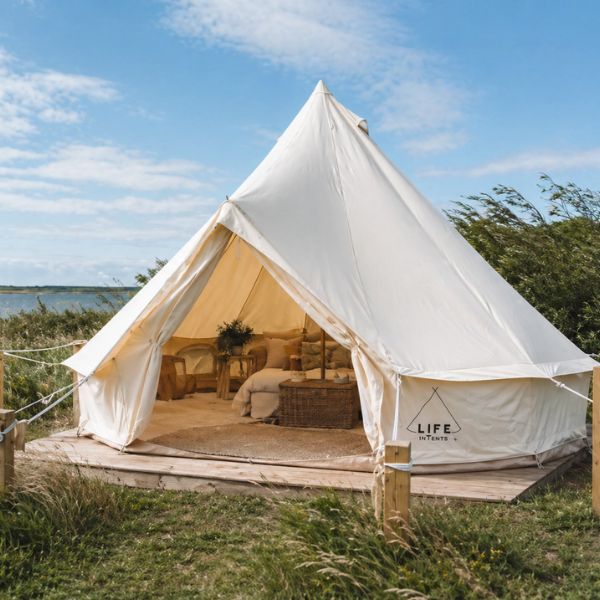
How Do Bell Tents Handle Wind? What to Know Before You Set Up
Canvas bell tents are loved for their roomy interiors, classic shape, and comfortable glamping feel.Bell tents can handle wind well when properly set up. Learn how shape, staking, guy line tension, and long-term anchoring all affect wind performance.
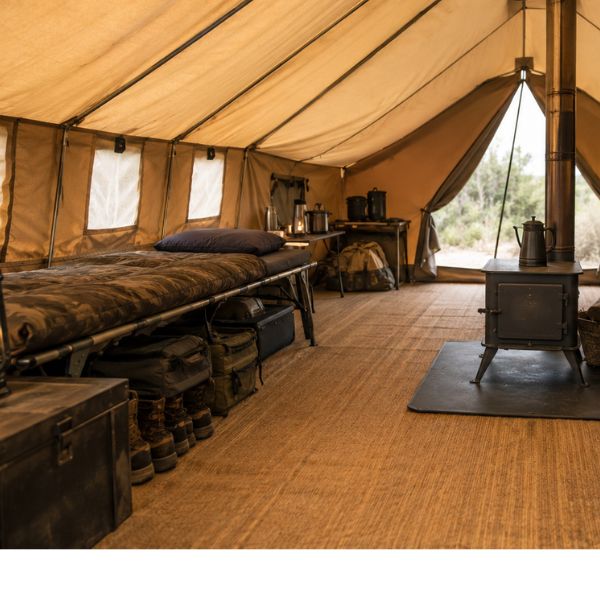
How to Set Up a Hunting Base Camp: 14 Tips for a Better Hunt
A good hunting base camp should do more than give you somewhere to sleep. For a multi-day hunt, camp