

The LiT List
Glamping & Camping Ideas + Resources
How Do Bell Tents Handle Wind? What to Know Before You Set Up
Canvas bell tents are loved for their roomy interiors, classic shape, and comfortable glamping feel. They make camping feel less like crawling into a nylon cocoon and more like stepping into a real outdoor room.
But if you’re planning to camp somewhere windy — or leave your tent up for more than a weekend — it’s fair to ask: how well do bell tents actually handle wind?
The honest answer is that bell tents can perform very well in windy conditions when they are properly set up, fully tensioned, and regularly checked. Like any tent, their strength depends not just on the materials, but on the way the whole structure works together.
Whether you’re setting up a Stella, Fernweh, Timberline Exchange, or another canvas bell tent, the same basic wind principles apply. A well-pitched bell tent can feel solid and secure. A poorly tensioned one can flap, shift, and put stress on areas that were never meant to carry that kind of force.
So, let’s talk about what makes bell tents perform well in the wind, what can cause problems, and what you can do to give your tent the strongest possible setup.
Why Bell Tent Shape Matters in the Wind
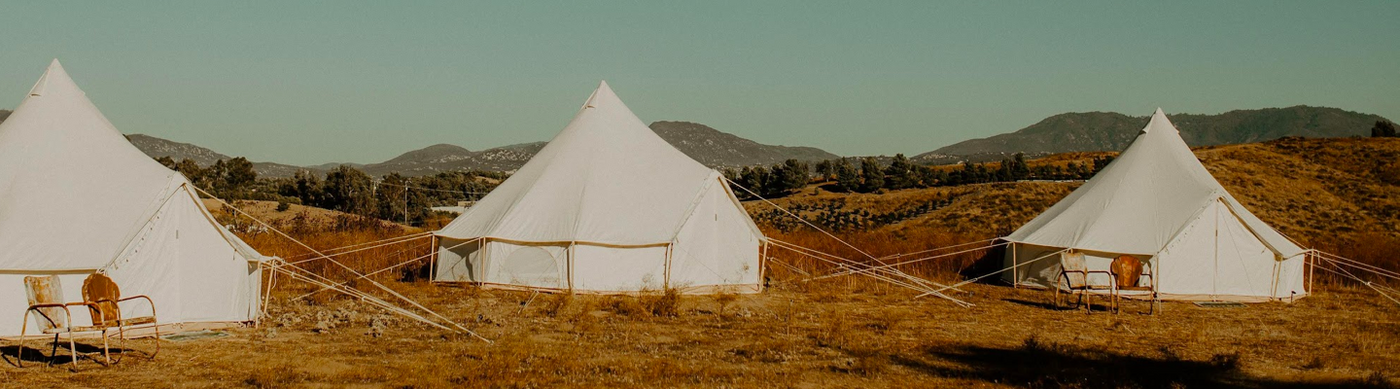
One reason bell tents have remained popular for so long is their simple, time-tested shape. A bell tent has a tall center pole, sloping canvas walls, a round or multi-sided footprint, and guy lines that pull the structure evenly outward.
That shape can be an advantage in the wind.
Unlike boxier cabin-style tents with flatter, more vertical walls, a properly pitched bell tent has angled sides that help wind move up and around the canvas rather than hitting a broad wall head-on. The circular footprint also helps spread pressure more evenly around the tent instead of concentrating it on one flat side.
This does not mean a bell tent is windproof — no tent is. But it does mean the design can perform very well when the tent is fully staked, properly tensioned, and set up with the wind in mind.
The key is balance. A bell tent gets much of its strength from the relationship between the center pole, canvas, perimeter stakes, and guy lines. When all of those parts are working together, the tent holds its shape and sheds wind more effectively.
But if the guy lines are loose, uneven, or missing, that advantage starts to disappear. The canvas can flap, the structure can shift, and pressure can build in places that should not be carrying the full load.
So while the bell tent shape is naturally well-suited for wind compared to many tall, boxy camping tents, the setup still matters. The best wind performance comes from pairing that smart shape with even tension, secure anchors, and regular checks as conditions change.

How Much Wind Can a Bell Tent Handle?
This is one of the most common questions people ask before buying a canvas bell tent, and the answer depends heavily on the setup.
Generally speaking, a well-made bell tent that is properly pitched, fully staked, evenly tensioned, and set up in a good location may be able to handle strong winds — in some cases, around 60 mph. Bell tents have also been known to withstand even higher gusts when they are carefully anchored and maintained.
But that does not mean every bell tent in every setup can safely handle those conditions.
Wind performance depends on many factors: tent size, soil type, stake placement, guy line tension, exposure, rain saturation, ground softness, and whether the tent is being checked as conditions change. A tent in a protected campsite with firm anchors is very different from a tent sitting in an open field with loose guy lines.
In fact, setup matters so much that a poorly pitched tent can be damaged by a much smaller gust. Even a 20 mph gust can cause problems if the tent is loose, unevenly tensioned, missing guy lines, or staked into soft ground.
So rather than thinking only in terms of wind speed, it’s better to think in terms of wind readiness. A bell tent performs best when it is fully anchored, evenly tensioned, and monitored before and during windy weather.
Why Proper Tension Matters So Much
A bell tent is strongest when every part of the structure is doing its job.
The center pole holds the peak. The perimeter stakes define the footprint. The guy lines pull the canvas outward and downward. The door frame supports the entrance. Together, these parts create a balanced structure.
But if one side is loose, or several guy lines are not being used, the tent no longer shares the load evenly. Wind will find the weak spots. A loose wall may start to flap. A stake may work its way out. A pole may lean. A zipper may get extra strain. Over time, small setup issues can become bigger problems.
This is why we always recommend using all guy lines, not just a few. It might be tempting to skip some on a calm day, especially if you’re only camping for a night or two, but the weather has a way of being rude after you’ve gone to bed.
A properly tensioned tent is quieter, sturdier, and more comfortable. It also helps protect the canvas and hardware from unnecessary stress.
How to Set Up a Bell Tent for Better Wind Performance
Start with your site choice. Whenever possible, avoid the most exposed spot in the area. Open fields, ridgelines, beaches, and gaps between buildings or trees can create stronger wind exposure. A slightly more protected location can make a big difference.
Once you choose your site, take your time with the setup.
Make sure the tent floor is pulled out evenly before staking the perimeter. A lopsided footprint makes it harder to tension the rest of the tent correctly. After the center pole is raised, work your way around the tent and adjust each guy line so the canvas is smooth and evenly supported.
The guy lines should be firm, but not cranked so tightly that they distort the shape of the tent. Think “even tension,” not “winch it down like a pirate ship in a hurricane.”
For typical camping use, Life Intents bell tents include strong stakes and guy lines that are designed to work well in most standard conditions. But in especially windy locations, soft soil, sandy ground, or long-term setups, it may be worth upgrading your anchoring method or adding additional tie-off points.
A few best practices:
- Use every guy line.
- Stake the tent evenly all the way around.
- Angle stakes away from the tent for better holding power.
- Check that the center pole is straight.
- Keep doors zipped during wind.
- Retighten guy lines after rain, heavy dew, or big temperature swings.
- Check the tent again before forecasted wind arrives.
The setup does not need to be complicated, but it does need to be intentional.

What About Long-Term Setups in Windy Locations?
Long-term setups require a different mindset than weekend camping.
For a weekend trip, staking your tent into the ground and checking tension once or twice may be enough. But if your bell tent will be left up for weeks or months, especially in a windy location, you need a more durable plan.
The biggest thing to understand is that guy lines loosen over time. Wind, rain, canvas movement, soil conditions, and temperature changes can all affect tension. Even a well-pitched tent may need adjustment every couple of days.
If someone simply stakes the ropes into the ground, walks away, and assumes the tent will stay perfectly tensioned on its own, problems are likely.
For long-term windy setups, we recommend tying guy ropes off to more secure fixed points whenever possible. This could include wood posts, a simple perimeter frame, deck framing, permanent ground anchors, or another strong structure designed to hold tension.
This kind of setup reduces the chance of stakes loosening in the soil and gives the tent a much more dependable anchor system. It also makes regular maintenance easier because you can see and adjust tension more consistently.
For glamping sites, retreat properties, backyards, or semi-permanent camps, a framed or post-based guy line system is one of the best ways to improve wind stability.
Should You Use a Fly Cover?
A fly cover can be helpful for longer-term setups, especially when the tent will be exposed to sun, rain, or changing weather for extended periods. While a fly does not replace proper staking and guy line tension, it can add another layer of protection and help reduce direct wear on the canvas.
For windy areas, the fly also needs to be set up carefully. A loose fly can flap and create additional stress, so it should be secured and checked just like the tent itself.
Final Thoughts: Bell Tents Can Handle Wind, But Setup Is Everything
A canvas bell tent is a strong and comfortable shelter, but it is still a tent. It needs proper setup, thoughtful site selection, and regular attention when conditions change.
The good news is that most wind-related issues can be reduced with the basics: use all the guy lines, tension the tent evenly, choose a protected site, check your setup often, and use stronger anchors for long-term or exposed locations.
Bell tents are not just beautiful; when pitched well, they can be sturdy, practical, and dependable outdoor spaces.

Related Resources
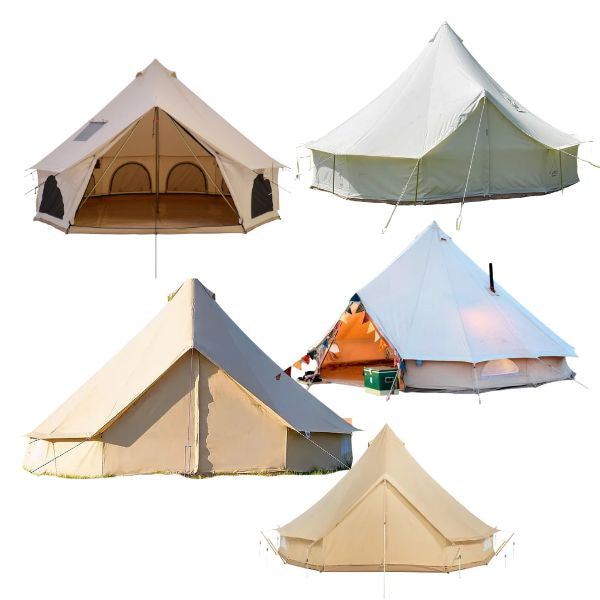
Five Canvas Bell Tents Compared
A bell tent in the 16-foot size class offers room for a bed, furniture, and camping gear. But tentsCompare five popular 5M canvas bell tents. Explore how canvas weight, ventilation, wall height, and included features affect comfort and value—for family camping, furnished getaways, and longer stays.
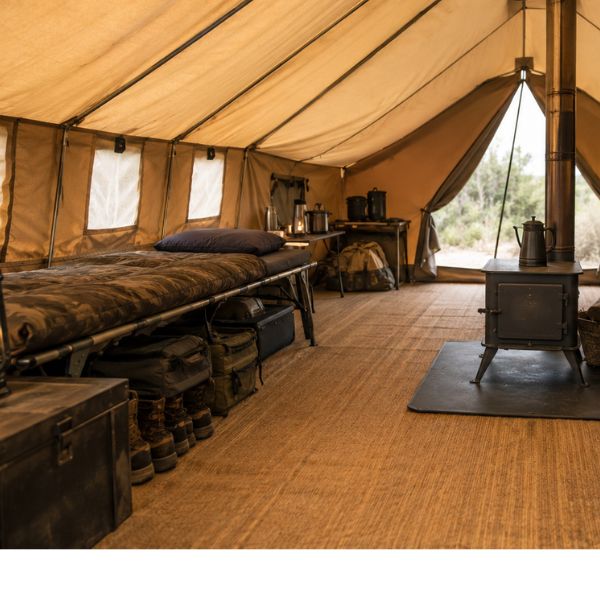
How to Set Up a Hunting Base Camp: 14 Tips for a Better Hunt
A good hunting base camp should do more than give you somewhere to sleep. For a multi-day hunt, camp