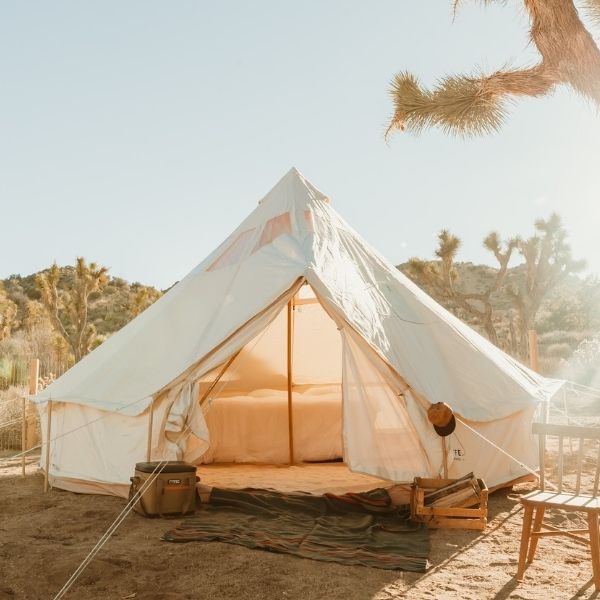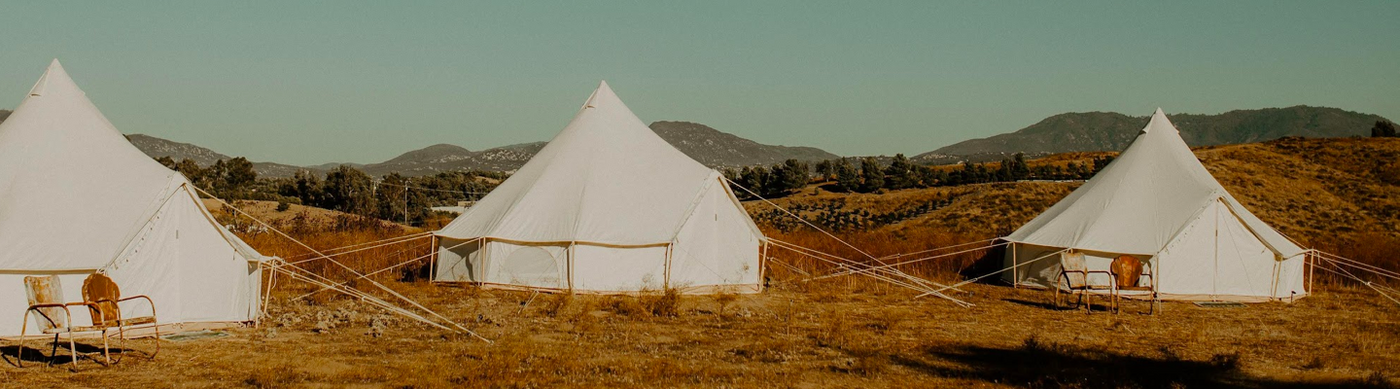
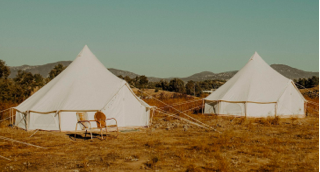
Whether you use your tent for seasonal camping, glamping, or extended stays, proper care is essential to keep it performing well over time. A well-maintained tent will last longer, resist damage better, and stay more comfortable and reliable through changing weather conditions. Long-term set-ups especially require a mindful approach to care and maintenance.
Below are key considerations for successfully leaving up any canvas tent for more than a couple of weeks at a time.
1. Site Preparation
The ideal tent site will have good sun exposure, natural water drainage away from the tent, is free of foliage (whether that's large tree limbs or tall grass), located in a natural breezeway and is of course on flat ground. Each of these features helps to combat the growth of mold, enemy #1 to canvas.

Building a wood platform helps to raise a tent off of the ground, away from standing water, mud, and prolonged ground moisture. If a platform isn’t an option, then laying down quarter minus gravel, decomposed granite (or similar) is a great affordable base to create good water drainage.
Strongly consider a tent fly cover to extend the life of your canvas by providing protection from long-term UV exposure, discouraging dampness, and helps to insulate your tent during hot or cold temperatures. A fly cover can even be temporarily installed when your bell tent is not in use to give your tent extra life and reduce exposure from Mother Nature.
Your guy lines will not maintain tension for weeks at a time. If you plan on keeping your tent up for long periods, create posts that you can tie off your ropes to so that they will not loosen over time. Loose ropes + wind = damaged tent.
2. Regular Maintenance
Rain, birds, trees, leaves wind and the sun will impact the condition of your bell tent after your initial set it up. You will want to monitor and care for your canvas tent regularly to maximize the return on your investment.