La lista de LiT
Ideas + recursos para acampar y glamping
The 7 C's of Camping and Glamping: A Code of Ethics
Ever heard of the 7 C’s of Camping? What about the 7 C's of Glamping?
Among the countless camping articles and outdoor content online, the 7 C’s of Camping almost seem to be buried beneath. Instead, today, if you search for it, it brings up a list of categories for camping essentials or even wilderness survival essentials
But that’s not what we’re asking about. So what are the real 7 C’s of Camping? It is a code of ethics for campers; one that not everyone is familiar with. One that has nearly been forgotten. And while camping and glamping have become increasingly embraced, not every camper is familiar with this code or honor, or even abides by it.
So we’re here to shed light on it once again and remind everyone how to be on their best behavior.
The 7 C’s of Camping & Glamping

The North American Family Camper’s Association (NAFCA) lists a basic set of rules for campers to abide by, called the 7 C’s Camper’s Code of Ethics.
The 7 C’s of Camping is not to be confused with the 7 Principles of Leave No Trace, although these two distinct codes of ethics can be practiced hand-in-hand (in fact, think of the LNT Principles as a more in-depth rulebook for the 6th Code of Ethics: Conservation).
Now that we’ve covered that, let’s explore the entire set of rules, and how they can be applied to more modern glamping stays and resorts.
1. Care
Take care of yourself, your family, and your fellow neighboring campers. Be considerate of those who share the facilities with you, and this goes for all shared amenities and communal areas like outdoor kitchens and pools or hot tubs.
Also, campground sites tend to be stacked close together, so being mindful of your neighbor’s peace and quiet is important. Keep your noise level down, since outside noises carry further than you think. Even glamping structures have thinner walls.
Avoid blinding lights like a car’s headlights (stick to low beams or parking lights at night) or that super-powered telescopic LED area light (swap with headlamps when you can).
2. Caution
Camping comes with its own safety rules. Practicing safety around the campground and campsite begins with taking caution of your surroundings.
Keep to slow speeds around the roads – kids and wildlife are always around! And generally practice and improve your camping skills, keeping your fire contained and manageable and learning how to use your stoves and flammable fuels properly.
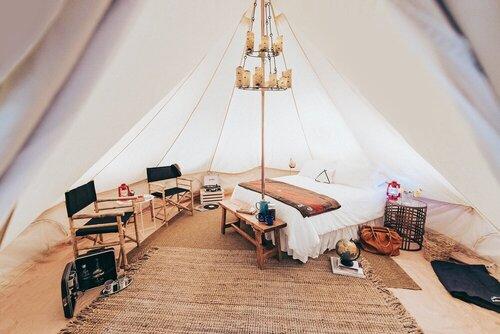
For glamping, it's also a good idea to learn how to operate amenities like wood stoves, propane heaters, and composting toilets. You should also avoid overloading electrical systems, especially if they're run by solar and have limited power capacity.
In other words, take caution to ensure you don’t endanger yourself or others.
3. Courtesy

Common courtesy goes a long way. Be kind and polite to your fellow campers and rangers, and treat glamping hosts with respect. They’ll return the same courtesy.
Respect everyone’s privacy. This includes being mindful of neighboring boundaries. For example, cutting through someone else’s site is considered bad etiquette, but many newbie campers do so without a second thought. If your glamping site is on a private working farm, stay within the designated area. Ask permission first, at the very least.
And while kids are always encouraged to play, parents are still encouraged to prevent a wild rumpus from starting. If you brought a dog, leash them and pick up after them.
For glamping stays, ask before inviting extra guests to tag along. And remember your check-out time, as turnover is critical for small business glamping operators.
4. Cleanliness
The cleanliness rule requires campers to keep their campsites, the campground, and the surrounding park tidy.
But it’s about more than picking up litter. It’s about wiping down the communal sink station and drain after doing the dishes. It’s also about using designated bathroom facilities. And it's also about making sure that the garbage bin latch is secure so raccoons don’t have an all-night rager.
Treat the space like home. And when you pack up, be sure to gather all personal belongings and to leave the site better than you found it.
Also, remember that accidents happen, so don't hide spills or damage; just notify someone so they can resolve it quickly. Owning up to an honest mistake is far more appreciated.
5. Cooperation

Cooperation asks us to work with rangers, hosts, and staff to follow all posted rules and regulations. This could be anything from rules about outside food and alcohol. In fact, you may not understand why the rule is in place, but trust that there’s a good reason. It may even be for liability reasons.
For example, some parks restrict hammocks, but it’s simply to protect the bark of trees. And don’t overextend the number of people, tents, or vehicles allowed at your site, hoping no one notices; it’s to manage the environmental impact and prevent overcrowding.
Of course, if the campground works on an honor system, be sure to pay fees upon arrival (or when the camp station opens the following day).
Cooperate and assist fellow campers, too. Did someone run down their car battery? Help them get on their way with a jump. Does someone need help starting a fire? Share your firestarter and offer some friendly advice.
6. Conservation
As mentioned, much of this code of ethics is summed up by the LNT Principles. But even eco-resort glamping properties have sustainability practices.
At your site, use the existing fire rings and keep flames manageable. Be respectful to wildlife and don’t even think of feeding that cute chipmunk. Keep wildlife wild and observe from a distance.
Use biodegradable soap away from water sources. When you leave, pack out everything human and trash-related, leaving behind natural objects like plants, rocks, and timber. Use recycling and composting systems, if available.
Around the park or glamping facilities, stick to established paths and trails, as "social trails" cause erosion. And, as fun as it seems, avoid building cairns or stacking rocks; it can disrupt microscopic ecosystems. Just like a state or national park, some glamping properties are on wildlife sanctuaries and conservation areas.
Whether you book a camping site or a glamping suite, don't waste valuable resources like water, electricity, and firewood. Conservation is such an important part of protecting our earth for generations to come, and it starts with tiny efforts made by you.
7. Common Sense
Camping requires some common sense, especially in a precarious or sticky situation. Fair reasoning, flexibility, and expectations will greatly benefit you and even prevent a camping trip nightmare.
For instance, planning ahead, just as you would for any trip, can help you prepare for weather conditions, potential risks, and other circumstances you might encounter. Read the glamping stay's listing to set your expectations and know what amenities (WiFi, air conditioning, bath towels) are available.
Having common sense also means being honest with yourself about your capabilities and needs. When it comes to camping, know your limitations, and even your family members' limitations. Even glamping can mean off-grid, so understand what that means.
It’s okay to admit when plans go awry and, more importantly, to pivot when they do, shift plans, and prioritize safety above all.
In short: With a good head on your shoulders, a positive outlook, and a sense of humor, your camping trip will be – more or less – a successful one.

Learn, Practice & Share The 7 Camping and Glamping Etiquette Rules
Be a good neighbor or guest at camp sites and glamping stays. Follow the 7 C’s of Camping and the Camper’s Code of Ethics -- even when you're glamping! -- to make the experience more enjoyable.
And, if you’re like many and haven’t heard of these camping etiquette rules, be sure to share. Whether you are new to glamping or a seasoned camper, the 7 C’s of Camping are a nice refresher on how to act with kindness and courtesy.
Related Resources
Cómo iniciar un negocio de glamping: crear un glampsite perfecto
La industria del turismo está evolucionando rápidamente a medida que amigos y familiares buscan e Con un poco de trabajo inicial, puede crear un negocio de glamping rentable con nuestras tiendas Life inTents Bell, ganando hasta $15,000 al año. Este artículo detallado le brinda excelentes consejos para lograrlo a bajo costo con una carpa campanilla de lona comercial.

Festivales de música para acampar de Killer California para 2024
California se hace un nombre cada año en todo tipo de campos y departamentos. Las cosas parecen seEcha un vistazo a estos festivales de California de varios días.